A banking-style interface does not determine whether your balance is insured. Protection depends on the legal entity holding the money, the account structure and the records connecting the funds to you.
Key Takeaways
- A fintech app is not automatically an insured bank, even when it uses a bank partner.
- Pass-through coverage depends on ownership, account disclosures and records identifying each customer’s balance.
- Safeguarding of e-money is an insolvency-protection process, not the same as deposit insurance.
- Protection limits may include other deposits held at the same bank, institution or shared banking licence.
- Verify the legal provider, partner bank and account terms through current official sources.
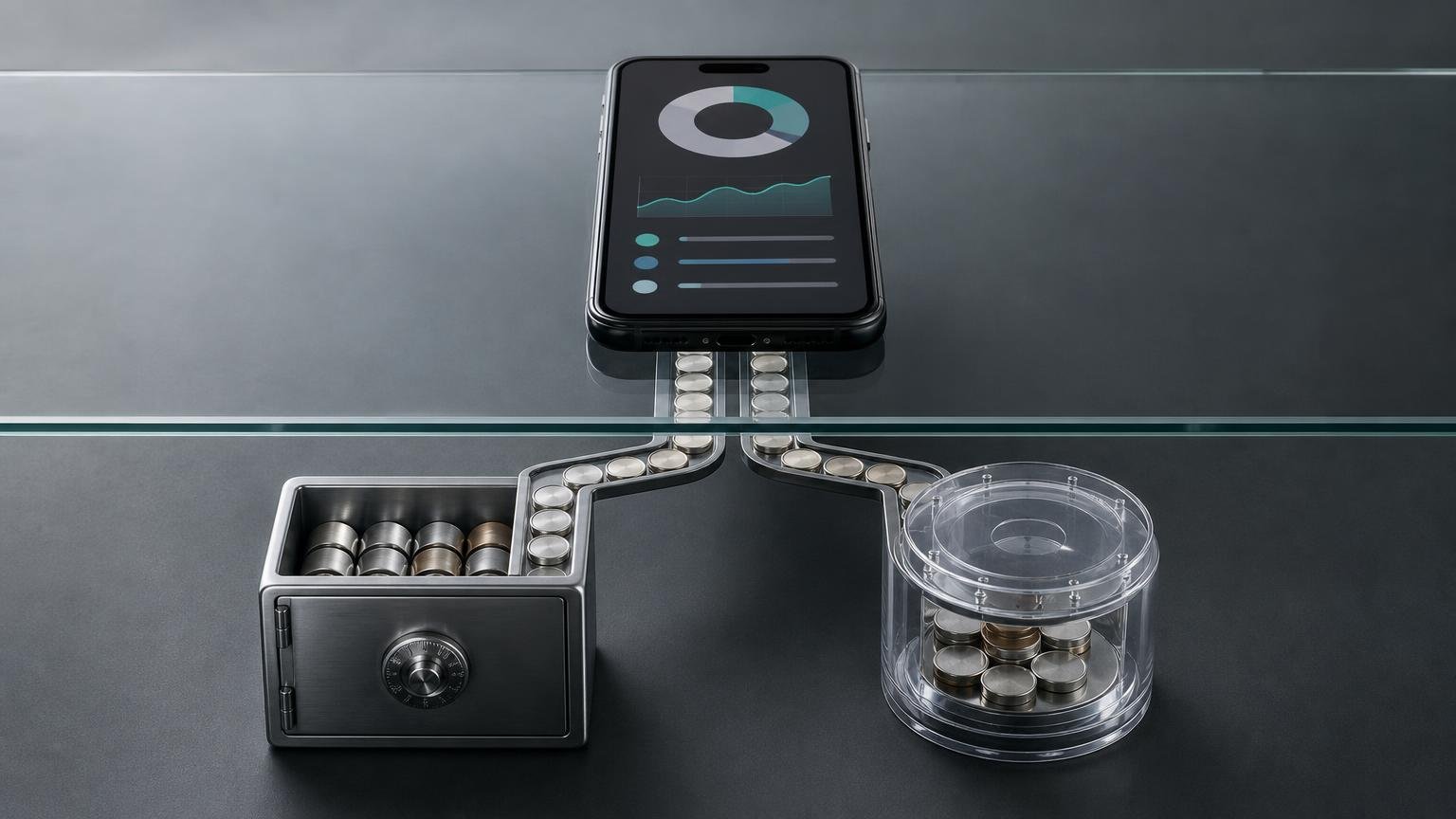
A balance shown in a fintech or payment app may look like money in a bank account, but the legal protection can be very different. It might be an insured deposit held in your name, money placed in a pooled account at a partner bank, or e-money subject to safeguarding rules rather than deposit insurance.
The practical answer to “is money in a fintech app insured?” therefore depends on more than the app’s branding. You need to identify the provider’s legal entity, where the funds are held, whether the balance legally qualifies as a deposit and which protection scheme applies.
The short answer
A fintech app is not automatically an insured bank. In the United States, for example, a nonbank app is not itself insured by the Federal Deposit Insurance Corporation. Customer funds may qualify for FDIC protection after reaching an FDIC-insured partner bank, but only if the ownership and recordkeeping requirements for pass-through coverage are met.
That distinction matters because deposit insurance generally responds to the failure of the insured bank. It does not necessarily protect customers when the fintech intermediary fails, becomes insolvent or has not yet transferred their money to the bank.
Other markets draw similar distinctions between bank deposits and balances issued by payment or e-money businesses. The protection may still be meaningful, but safeguarding and deposit insurance are not interchangeable.
Three common ways an app may hold customer money
1. An account in the customer’s name
The clearest structure is usually an eligible deposit account opened in the customer’s own name at an insured or protected institution. Any coverage remains subject to the rules and limits of the relevant national scheme, including aggregation with the customer’s other eligible deposits at the same institution.
2. A pooled or custodial account with pass-through coverage
A fintech may place many customers’ funds into one account at a partner bank. Under a qualifying pass-through structure, the insurance system may treat each customer as the beneficial owner of their share rather than treating the fintech as the sole depositor.
Pass-through coverage is not a separate insurance category. In the US, eligibility depends on matters including actual ownership, disclosure of the custodial or fiduciary relationship, and records that identify each beneficial owner and balance. The applicable limit is based on each owner’s deposit category and other deposits held in the same category at the same bank.
The app’s internal ledger may not always be sufficient. Bank records and qualifying supplementary records must allow the FDIC to determine who owns the money and how much belongs to each person.
3. E-money or payment funds protected through safeguarding
Some app balances are not bank deposits at all. In the UK, authorised electronic money institutions and authorised payment institutions must generally safeguard customer funds, such as by placing them in a separate bank account or using insurance or a comparable guarantee.
Safeguarding is intended to protect customer money during insolvency, but it is not Financial Services Compensation Scheme deposit protection. If the provider fails, customers may need to claim through an administrator or liquidator. Repayment can take time and may be reduced by insolvency costs. The UK Financial Conduct Authority also notes that safeguarding is not generally required for small payment institutions.
How protection works in selected markets
United States: FDIC insurance follows the bank and account structure
Standard FDIC insurance is generally limited to $250,000 per depositor, per insured bank, per ownership category. A customer using a fintech may receive pass-through protection if the money has been deposited at an FDIC-insured bank and all ownership, disclosure and recordkeeping conditions are satisfied.
Customers should confirm the actual partner bank and examine the account agreement and fund-flow arrangement. A statement that funds are “FDIC insured” does not mean the fintech itself is insured, nor does it establish that money is protected while it is still moving through the fintech.
Customers must also account for deposits they hold elsewhere at the same partner bank. Funds in the same ownership category can be combined when the FDIC calculates the limit.
United Kingdom: bank deposits and e-money receive different treatment
The FSCS protects eligible deposits at authorised banks, building societies and credit unions. The stated limit is up to £120,000 per eligible person, per authorised institution, with payment normally made within seven working days. Qualifying temporary high balances may be protected up to £1.4 million for six months.
Protection is determined by the authorised institution or shared banking licence, not by the app, account name or consumer-facing brand. Multiple brands can share a single licence and therefore a single protection limit. Money placed through an aggregator can be protected when it is actually held as an eligible deposit at a qualifying bank.
E-money and payment-service balances do not receive direct FSCS deposit protection merely because the app resembles a current account. Users should check the provider’s precise legal entity, regulatory permission, Firm Reference Number and account terms using the official FCA register and FSCS checker. Limits and eligibility can change, so the current official information should be reviewed before relying on a protection claim.
European Union: the balance must qualify as a bank deposit
EU rules require eligible deposits at participating banks to be covered by officially recognised national deposit guarantee schemes. The harmonised base protection is €100,000 per depositor per bank.
Directive (EU) 2026/804 was adopted on March 30, 2026, and the revised crisis-management and deposit-insurance framework entered into force on May 10, 2026. Eligibility, aggregation, temporary high balances and implementation details still need to be checked under the law of the relevant member state.
The presence of a bank somewhere behind an app does not by itself make the user’s balance an insured deposit. If the app issues e-money and keeps backing funds at a bank, that arrangement should not automatically be described as customer-level deposit insurance.
Canada: the account and beneficiary records are decisive
The Canada Deposit Insurance Corporation distinguishes among three fintech structures. An eligible account opened in the customer’s name can receive protection of up to C$100,000 per applicable coverage category. A qualifying trust account can receive up to C$100,000 of eligible-deposit protection for each identified beneficiary.
By contrast, if a pooled account is held solely in the fintech’s name, the fintech is treated as the depositor. That account receives only up to C$100,000 in total rather than a separate limit for every customer.
For trust treatment, accurate beneficiary names, addresses and balances are essential. CDIC protection concerns the failure of the member institution holding the deposit; it does not administer the fintech’s own bankruptcy. Access may also depend on the fintech or trustee supplying the required records.
Deposit insurance versus safeguarding
- Deposit insurance: Protects eligible deposits when the covered bank or deposit-taking institution fails, subject to scheme limits and eligibility rules.
- Pass-through coverage: May attribute money in a pooled or custodial bank account to its beneficial owners when the legal and recordkeeping requirements are met.
- Safeguarding: Separates or otherwise protects customer funds held by certain nonbank payment or e-money providers, but may involve an insolvency process rather than direct compensation from a deposit insurance scheme.
None of these terms should be treated as a general guarantee against every reason an app might stop providing access to money. The relevant protection may cover the partner bank’s failure without covering the fintech’s failure, operational disruption or money that has not yet arrived at the insured bank.
How to check an app’s protection
- Find the legal provider: Identify the company named in the account agreement rather than relying on the app’s brand.
- Determine whether it is a bank: Check whether the provider is an insured deposit-taking institution, a payment firm, an e-money institution or an intermediary using a partner bank.
- Identify the bank: If a partner bank is involved, confirm its legal name and whether it participates in the relevant official protection scheme.
- Understand the account title: Ask whether the account is in your name, held through a qualifying trust or custodial arrangement, or held solely in the fintech’s name.
- Check when coverage begins: Establish whether protection applies only after money reaches the partner bank.
- Review aggregation rules: Include other eligible deposits held at the same bank, authorised institution or shared banking licence.
- Look for recordkeeping language: For pooled arrangements, determine how the provider records beneficial owners and individual balances.
- Separate insurance from safeguarding: If the terms refer to safeguarded funds, do not assume that this means deposit insurance.
What This Means
The app interface is the least important part of the insurance question. What matters is the legal chain beneath it: who owes you the balance, where the money is held, whose name is on the account and whether the official protection scheme can identify your ownership.
A direct eligible bank deposit usually presents a more straightforward coverage analysis. A pooled fintech arrangement can also provide customer-level protection, but only when its legal structure and records satisfy the relevant requirements. An e-money balance may instead rely on safeguarding, which can expose customers to delays and insolvency expenses if the provider fails.
Before keeping a substantial balance in any app, check the current account terms and the linked official regulator or deposit-protection source. Coverage limits, legal permissions and implementation rules can change.
Sources
- FDIC — Banking With Third-Party Apps
- FDIC — Pass-Through Deposit Insurance Coverage
- UK Financial Conduct Authority — Using Payment Service Providers
- Financial Services Compensation Scheme — Bank and Savings Protection Checker
- European Commission — Deposit Guarantee Schemes
- Canada Deposit Insurance Corporation — Fintechs
